- Peterborough: 01733 807999
- Romford: 01708 874667
Peterborough: 01733 807999
Romford: 01708 874667
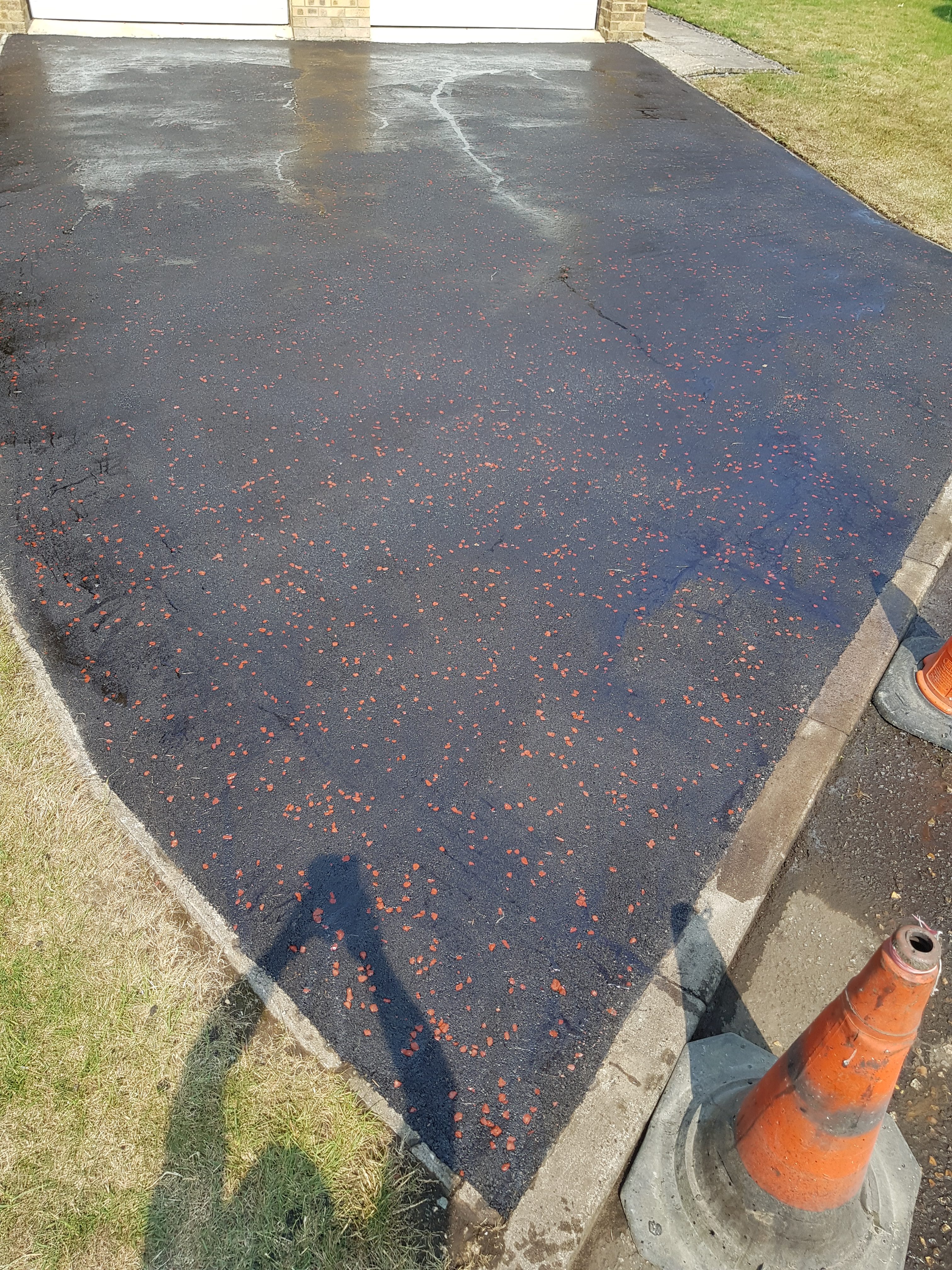
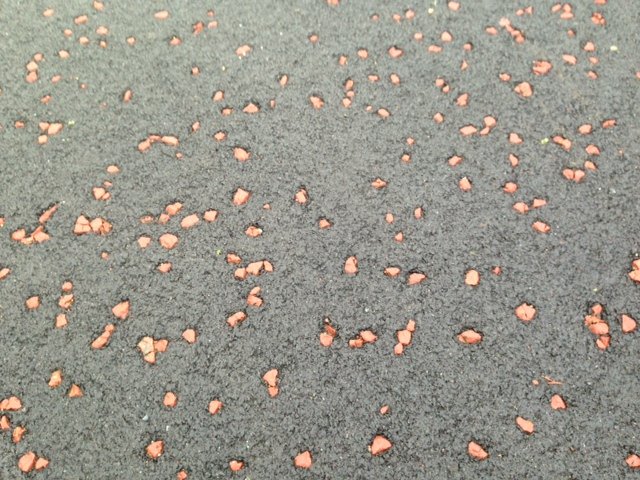
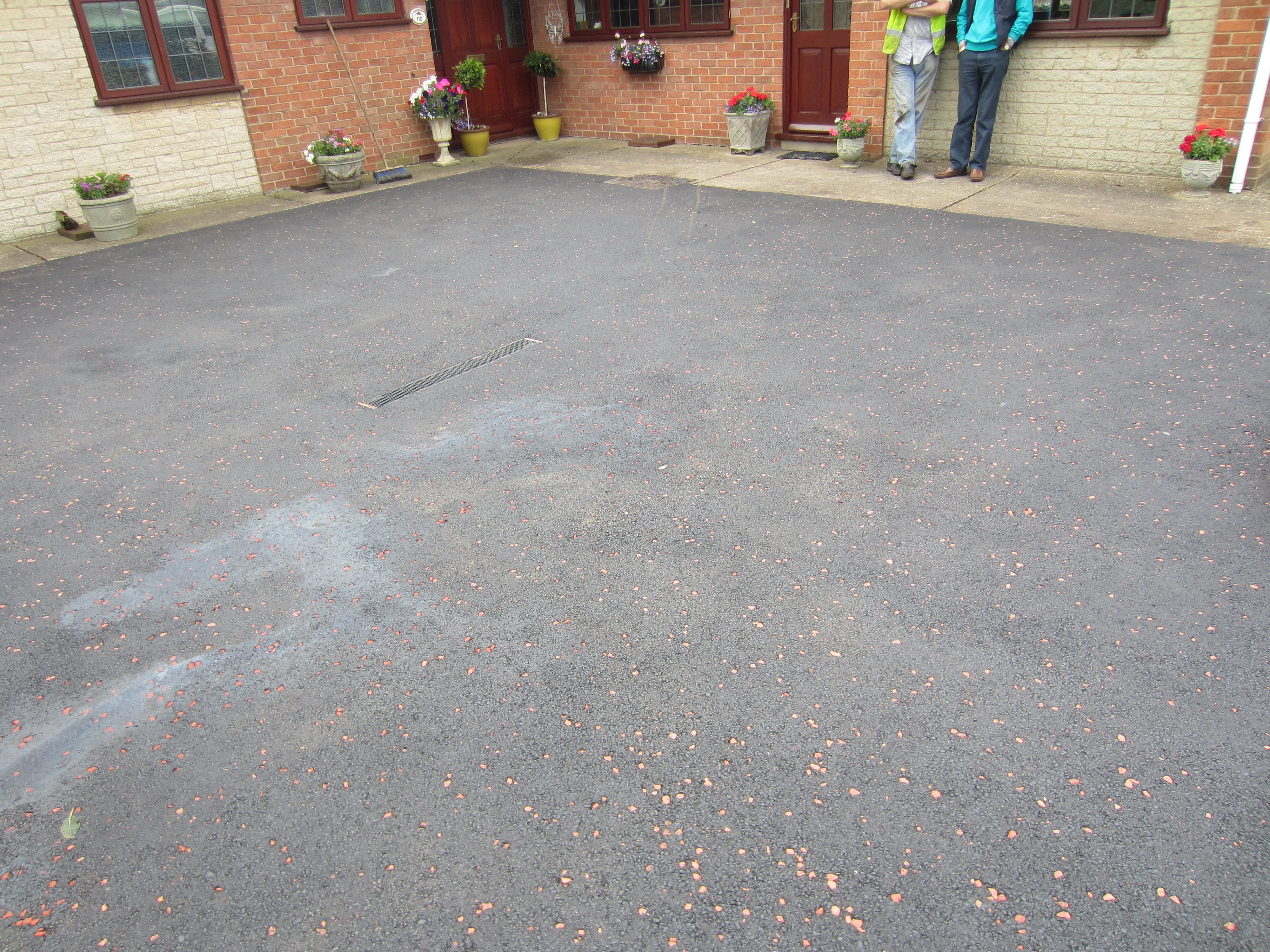
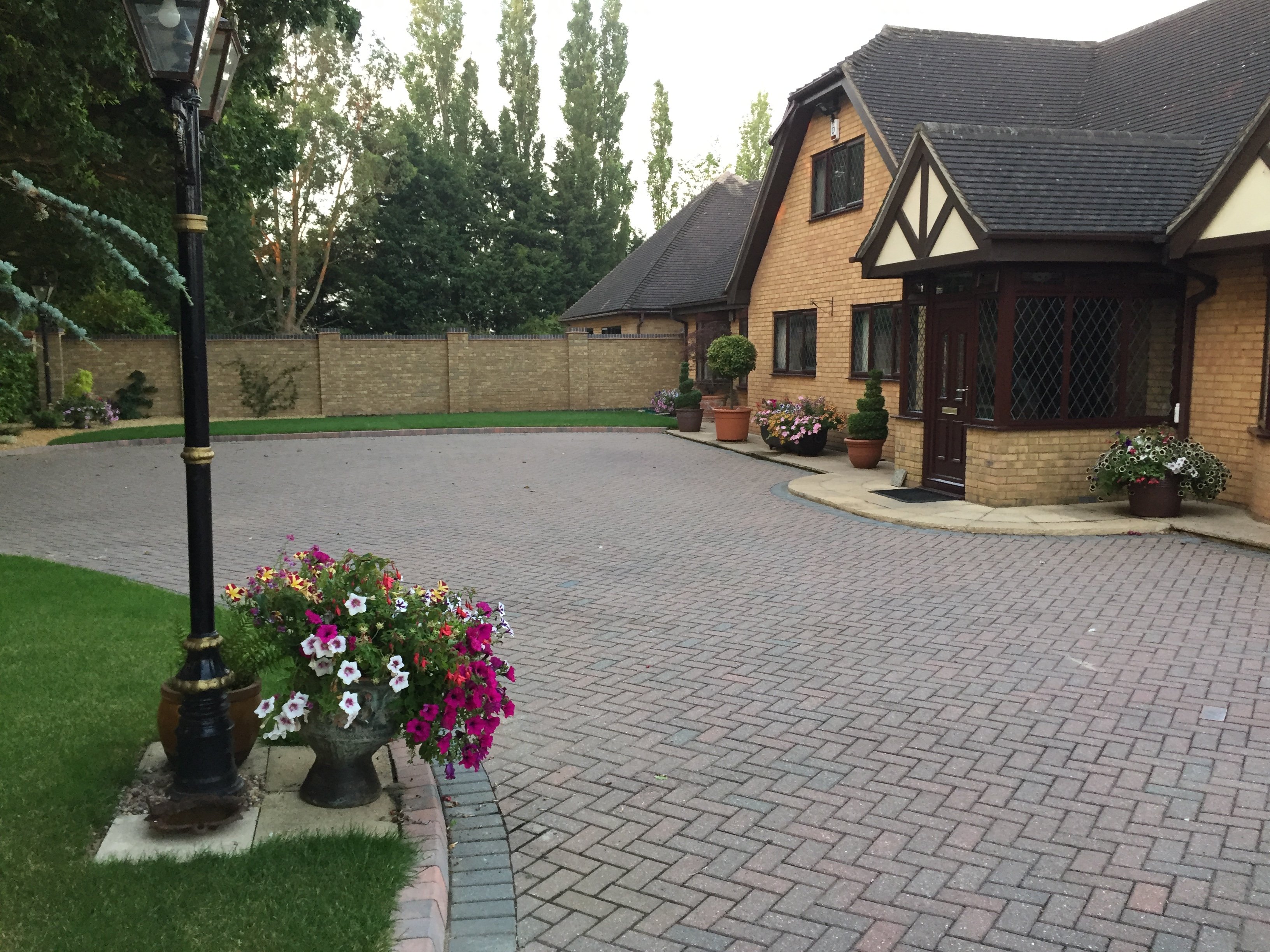
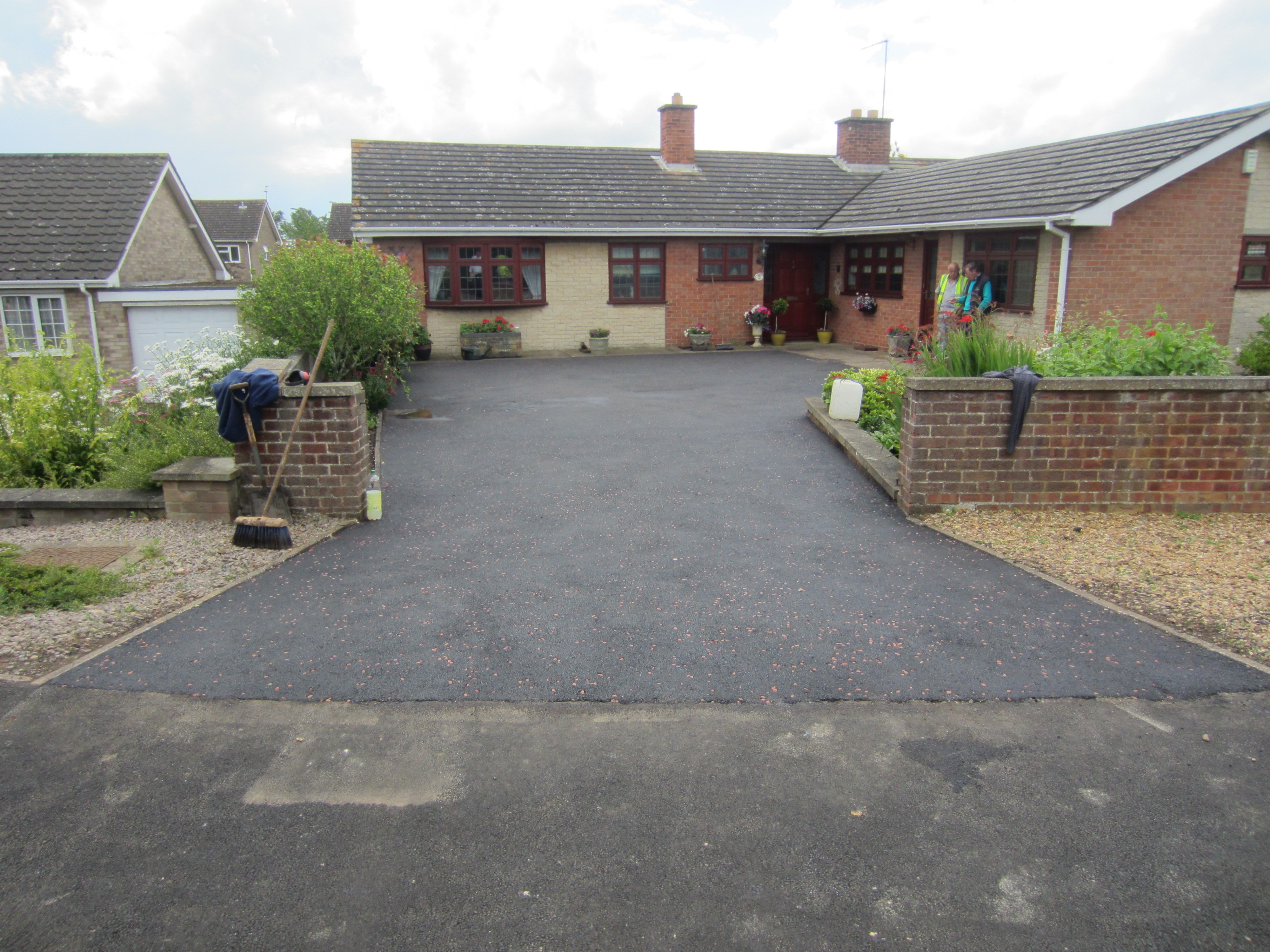
There are many surfaces suitable for driveways including Asphalt, (various colours), Bitmac, block paving, pervious or tegula paving, surface dressing, slurry sealing and resin bound. AMT will provide and apply/fix whatever surface is required.
Find out more about this service below:
New Asphalt DrivewayResurfacingFootways/Paths Surface Dressing
With any type of construction, the load bearing must have a good foundation. This also applies to a new driveway. We therefore recommend the following during the construction process; the minimum thickness of sub-base (hardcore) for a driveway should be at least 200-mm, rolled and compacted in 100-mm layers, then 50-mm of 20-mm A/C base course bitmac and finally 30-35-mm of surface course. The total thickness should be 280-290-mm.
Providing the surface on the driveway has not been badly damaged, AMT can lay a surface course straight over the top of the existing one. This can be completed quite quickly. If there are edging kerbs etc, we break out the asphalt 400-mm from the edging to a depth of 40-mm and form a good tie-in to all thresholds and adjoining surfaces. We then sweep the surface clean and ensure all loose particles have been removed. Sometimes it also necessary to power wash to ensure all contaminates have been removed.
(Should there be cracks or open joints in the surface we can apply a special membrane which is adhered to the surface with a hot bitumen to cover them. When the membrane is covered with asphalt it remains flexible and prevents the cracks opening up again)
The adhesive/bitumen is then applied to the surface to form a good bond between the old and new surface. The surface is then regulated to form our set levels and the asphalt is laid to appropriate thickness.
In some instances the asphalt may have deteriorated beyond repair so it may be necessary to remove the complete asphalt base and surface course. This usually occurs through oil spillage damage or when the surface has been left too long. It causes the bitumen content to dry out damaging not only the top surface course but also the base. The surface and base course can also be severely damaged through tree root movement. We can usually repair the damage and in some instances excavate soil around the root and form a ‘root barrier’ with concrete to prevent further damage to the asphalt.
We can determine if it’s necessary to remove the complete surface by close inspection of the asphalt. It may be possible to just remove a part of the asphalt and repair the rest with base course before resurfacing takes place.
Should it be necessary to remove the complete surface, the asphalt can be removed by first breaking it in to small pieces with a ‘breaker’ or by planing it with a specially designed machine. When all the asphalt has been removed, the sub-base should be re-compacted with a heavy vibroll to ensure it is compacted to the maximum before relaying the new asphalt.
Damaged edgings or drainage systems can also be replaced or repaired at the same time.
After excavation to the appropriate depth (usually 250- 270-mm), the base will be compacted and a Textile membrane applied. This helps to prevent contamination between the soil and the sub-base (hardcore).
The sub-base (200-mm of type 3 aggregate) will then be laid and levelled. The sub-base will be pervious and it must be well compacted. After the final compaction of the sub-base, an open textured base course is laid to a suitable level (maximum tolerance for designed levels should be no greater than 6-mm).
The surround/boundary of the drive should have a good form of edging. This can be concrete, metal or brick etc. We do not recommend using timber edging.The recommended thickness for resin surface course is 18 to 22-mm using an aggregate size of 03 to 0.5 or 05-mm to 0.8-mm.
Our sales director can advise on the thickness after visiting the site. We sometimes use a base course formed with a 06-10-mm resin base course instead of asphalt. It depends on the volume and type of trafficking it receives. The resin and aggregate are mixed together on site in a large rotary paddle mixer and transported direct to the working area in wheelbarrows. It is then spread to the required thickness and levelled by hand held steel trowels by our fully trained in-house tradesman. There are many colours of aggregate that can be used (too numerous to mention them all).
The word ‘Slurry’ is defined as ‘a thick runny sludge type material’. Bitumen slurry is the same; it is a thick bitumen or water-based material used for sealing driveways. The slurry seals the surface and prevents water/ice penetrating the asphalt as well as preventing the top of the surface from becoming loose. The surface must be clean and free from oil/grease etc and may also require power washing to ensure all loose materials/aggregates are removed before the slurry sealing takes place.
There are three colours to choose from, red, green & black.
We apply the ‘slurry’ by hand held rollers and squeegees to form a complete impervious surface. Curing time is 48 hours.
Although footpaths do not normally have to take much weight, it should be constructed to a good standard to prevent movement and cracking. We ensure there is an adequate sub-base structure and a good edging which will prevent the edges from breaking away.
There should be a minimum thickness of sub-base of 100-mm, plus 40-mm of asphalt base course then a 25-mm finish of surface course, the overall thickness should be increased if any type of vehicle uses/crosses-over the path. Most materials can be laid to form a footway including concrete slabs, (some slabs are formed with an anti-slip surface), asphalt, bitmac, anti-slip resin bound aggregates, paving bricks and gravel to name a few.
We can construct a footway from drawings or supply and fix materials only.
Should the existing surface be concrete or asphalt, we can resurface it with a fine asphalt, resin, slurry or hot tar and gravel dressing. Our sales director can help advise what type of surface would be suitable for you.
AMT can design and draw up the complete construction from excavation to completion, including thickness of sub-base, base course and surface course.
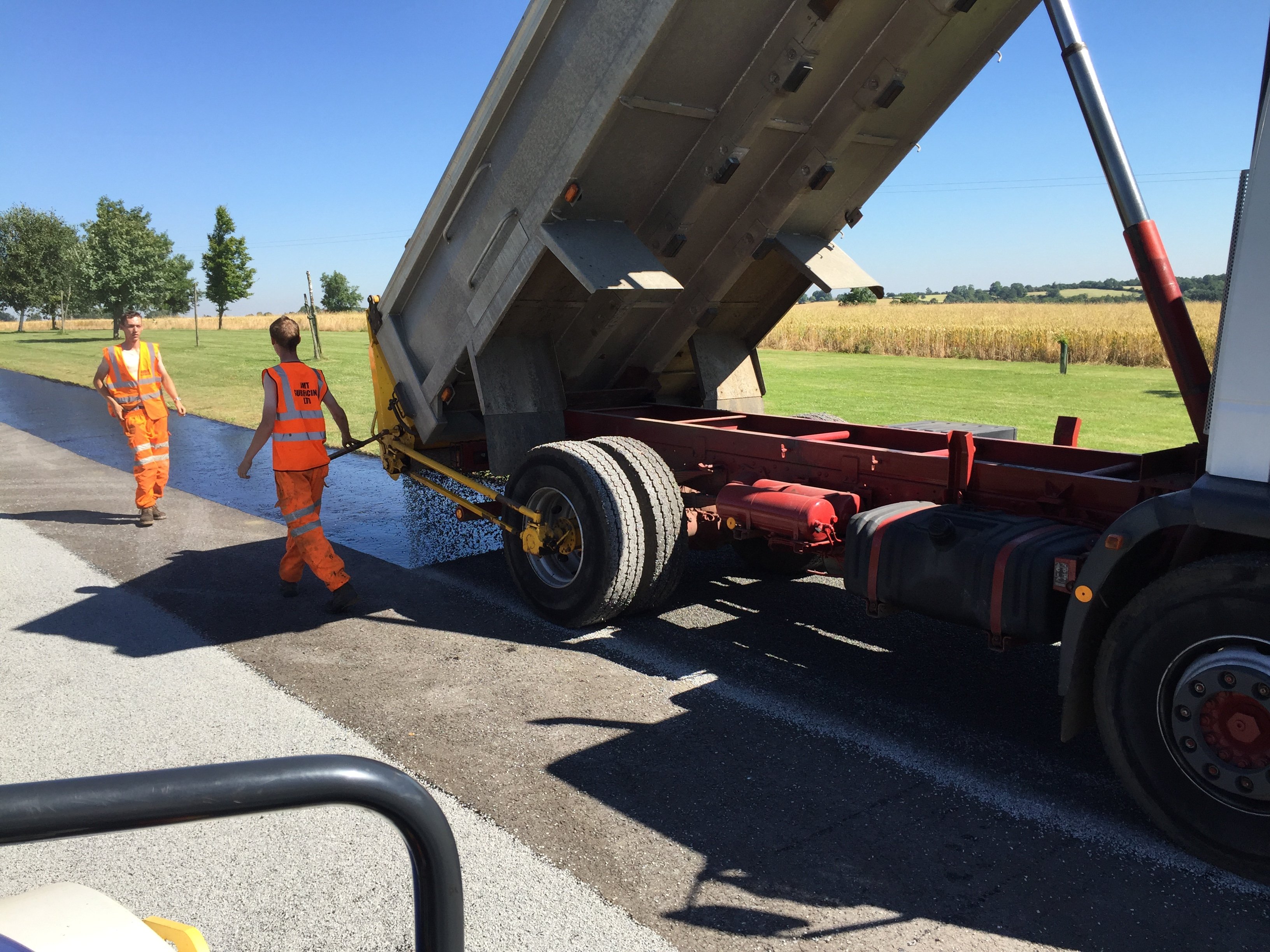
In most cases surface dressing is used to protect an asphalt surface which has weathered/dried out over many years which causes the asphalt to lose its flexibility. When all the flexibility has gone, the surface starts to crack and some of the aggregates ‘fret’ out which eventually leads to pot holes forming. The pot hole then fill with storm water and when vehicles go over the pot holes, the water is compressed into the sub-base which leads to the hole(s) expanding not only in depth, but also in its overall dimension. Damage can also be caused by freezing; as the ice starts to thaw, it expands, thus causing the pot hole to break out around the edges. However badly damaged areas are, they can be re-instated with a binder course.
First, we cut around the pot holes with a floor saw to form good vertical joints, we then clean out the base and back fill with base course bitmac. The surface is then cleaned to ensure all loose particles have been removed. A hot bitumen Polymer compound is then applied and either gravel or a granite aggregates are evenly applied and are compacted into the bitumen. This is one of the cheapest ways of resurfacing estate roads etc.
Gravel is usually used for aesthetics. It is also softer on the eye, especially around older stone buildings or heritage sites. There are many types and colours of gravel that can be used and we have a collection of samples for you to choose from.
Resin has been manufactured for many years and used together with fibre glass to mould and manufacture anything from boats, vehicles and aircraft. It is a very strong material but retains some flexibility. It is now one of the most up and coming materials used in the hard landscaping trade not only because of its durability but also its appearance as it is available in many different colours. Resin Bonded aggregate is on one of the hardest and smoothest materials on the market. We can apply other additional materials to form an anti-slip surface where necessary.
The sub-base and base course must be laid to a specified thickness to achieve its maximum strength and can be completely pervious if the correct sub-base is used. If the area is to be trafficked, then the thickness of the resin bound materials must be increased. Pedestrianised areas require a thickness of 10-mm and for trafficked areas this must be increased to 18-mm.